
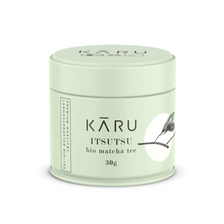
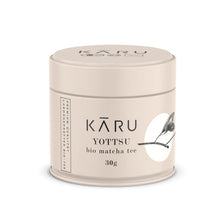
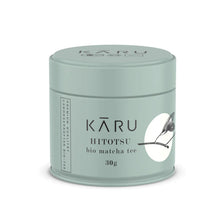



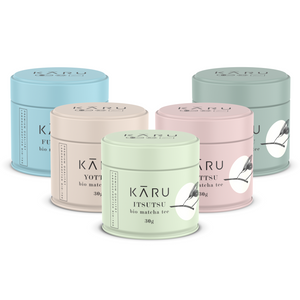


You don’t recognize good matcha by its label, but by verifiable facts: origin, cultivar, cultivation and price. If you want to buy matcha and judge its quality with confidence, you need a few clear criteria – and you’ll find them here.
Key points at a glance
- Real matcha is ground from tencha – grown in the shade and gently ground in a stone mill. Ordinary sencha does not make real matcha.
- Price as a first guide: In small packs, good matcha costs from about 60 cents per gram. Much cheaper tea is almost always culinary grade.
- Terms like ceremonial, supreme or super premium are not protected and on their own prove nothing about quality.
- Reliable signals are a named cultivar, a specific origin (e.g. Uji, Nishio), organic certification (e.g. DE-ÖKO-006) and lab tests.
- Low-quality matcha tastes fishy, seaweedy and bitter; good matcha is mild, creamy and slightly sweet (umami).
Why is matcha quality so hard to judge?
The market for matcha in Europe and the US is still young. Many people drink their first matcha with nothing to compare it to – and so depend on what the seller tells them. Some sellers take advantage of exactly this lack of experience.
Matcha became popular mainly as a supposed superfood: rich in amino acids, caffeine and antioxidants. In mixed drinks like a matcha latte or in baking, though, its fine flavor stays hidden. You can only taste matcha consciously when it is prepared the classic way – with water, bowl and whisk.
How do you recognize low-quality matcha?
Low-quality tea was neither properly shaded nor carefully harvested or correctly processed. Often it is not tencha at all, but ordinary green tea ground into powder by machine. A fine, complex aroma can never develop that way.
Such teas often smell and taste fishy, seaweedy and like old hay, at worst chemical or sour. In flavor they swing between very bitter and sour. On top of that comes a watery mouthfeel that leaves coarse powder residue on your tongue.
Good matcha is the opposite: it is mild, creamy and harmonious, with a natural sweetness and the typical umami note. Bitterness appears only subtly, if at all.
Which quality features matter when you buy matcha?
Don’t let a few bad apples unsettle you. Once you have found a reliable seller, you get all the information you need. These three points give you the quickest orientation:
Check the price
From approx. 60 cents per gram for small packs. Much cheaper is a warning sign.
Check transparency
Is all the information there and verifiable? Openness speaks for quality.
Check the cultivar
A named cultivar tells you the flavor, origin and character of the tea.
Why is price a clue to quality?
Real matcha takes a lot of effort: shading, hand-picking and slow grinding in a stone mill (around 30–40 g per hour) cost time and money. In small pack sizes, good matcha therefore costs at least about 60 cents per gram. If you find tea that is much cheaper, you’re better off avoiding it.
Why does naming the cultivar matter?
The cultivar (the variety of tea plant) determines flavor, character and part of the quality. When a seller names the cultivar and the region of origin – such as Uji or Nishio – it shows expertise and transparency. Anonymous mass-produced tea usually keeps quiet about both.
What other details should you check?
Besides price, transparency and cultivar, it is worth looking at some solid evidence:
- Are there details on origin and cultivation?
- Are there lab tests, for example for pollutants or radioactive contamination?
- Is the tea certified organic (e.g. DE-ÖKO-006)? If not: is there a transparent explanation why?
Feature |
Good matcha |
Low-quality matcha |
Raw material |
Tencha, shaded |
Sencha or similar, unshaded |
Processing |
Stone mill, slow |
Machine-ground |
Flavor |
Mild, creamy, umami |
Bitter, fishy, sour |
Information |
Cultivar & origin named |
Anonymous, only marketing terms |
Price (small quantity) |
from approx. 60 ct/g |
well below that |
How do you keep good matcha from going bad through poor storage?
Even the best matcha loses its aroma through poor storage. Light, air, heat and moisture are its enemies. So keep it airtight, away from light and cool – ideally in the original tin, and use it up promptly once opened.
Conclusion: how to buy good matcha
A quality promise is only worth as much as the facts behind it. Check price, transparency and cultivar, look for origin, organic seal and lab tests – and don’t be dazzled by terms that sound good but aren’t protected. Once you have found a reliable seller, the whole world of excellent teas is open to you.


