





The taste of a matcha is decided long before it reaches the cup – in the field. If you know the best tea-growing regions in Japan, you understand why a matcha from Uji tastes different from one from Kagoshima, and how to recognize true top quality.
The key points at a glance
- Four regions shape Japanese green tea: Shizuoka, Uji (Kyoto), Nishio (Aichi) and Kagoshima – each with its own climate, its own history and its own flavor profile.
- In 2024, Kagoshima became Japan's largest tea region, overtaking Shizuoka in harvest volume after decades at the top.
- Uji is considered the birthplace of matcha: it was here, from the 15th/16th century onward, that the shading technique ōishita saibai was perfected, giving rise to tencha – the leaf used for matcha.
- Nishio in Aichi is Japan's matcha specialist: over 90% of the tea fields there are tencha, and around 20% of Japan's tencha production comes from here.
- For organic matcha, Nishio and Kagoshima are among the leading origins – volcanic, nutrient-rich soils and an early switch to organic farming make the difference.
After China, Japan is the world's second-largest producer of green tea, supplying around 65,000 tons of green tea in 2024. Except for the cool north, tea is grown almost everywhere in the country – in more than 20 well-known growing regions. But four regions stand for the best quality. Those are exactly the ones we'll look at now.

Which regions grow the best tea in Japan?
The four leading growing regions divide roughly by focus: Shizuoka and Kagoshima dominate in volume, Uji and Nishio in matcha quality. An old tea saying sums it up: Kagoshima harvests earliest, Shizuoka the most – and Uji tastes best. This table shows the differences at a glance.
|
Region |
Prefecture |
Known for |
Flavor profile |
|
Shizuoka |
Shizuoka |
Largest sencha region, ~40% of production |
Fine, elegant, classic |
|
Uji |
Kyoto |
Origin of matcha, highest ceremonial grade |
Full body, deep umami |
|
Nishio |
Aichi |
Tencha specialist, >90% of fields for matcha |
Balanced, mild and sweet, spicy |
|
Kagoshima |
Kagoshima |
Largest tea region (since 2024), organic matcha |
Full-bodied, bold, mineral |
Why is Shizuoka Japan's classic tea prefecture?
For decades, Shizuoka was number one, and it still accounts for around 40% of Japan's green tea production today. The region southwest of Tokyo has a warm, humid climate with plenty of rainfall – ideal conditions for green tea. On the slopes of Mount Fuji, Japan's highest peak, tea grows with a particularly fine, elegant aroma.
Shizuoka owes its worldwide reputation to outstanding senchas. Tencha for matcha production is grown here too, but the focus is on conventional farming – which is why organic matchas from the region are rare. Incidentally, since 2024 Kagoshima has overtaken Shizuoka in pure harvest volume; for the first, high-quality harvest of the year, however, Shizuoka remains the leader.
Why is Uji considered the birthplace of matcha?
Uji in Kyoto Prefecture is Japan's oldest and most famous tea-growing region – with a history of more than 800 years. Its origins go back to 1191, when the Zen monk Eisai brought tea seeds and the method of powdered tea from Song dynasty China and wrote his tea treatise Kissa Yōjōki. From the temple gardens near Kyoto, cultivation spread to Uji.
The decisive step was an invention from the 15th/16th century: the shading method ōishita saibai, in which the tea plants are covered before the harvest. It gave rise to tencha – the leaf that is later ground into matcha. The Uji and Kizu rivers bring mist that lowers the risk of frost; together with fertile soil, this produces teas with a full body and complex aromas. To this day, the world's best ceremonial matcha teas come from Uji. We explain how the leaf becomes powder in our article Where does matcha come from and how is it made?
What makes Nishio Japan's matcha specialist?
Nishio in Aichi Prefecture is often called "the matcha city" – and rightly so. Its tea history begins in 1271, when the monk Shōichi Kokushi planted the first tea seeds at Jissoji Temple. The foundation for the modern industry was laid around 1872 by the priest Adachi Jundō, who brought cultivation and processing techniques from Uji to Nishio.
Today, no other region is as strongly focused on matcha as Nishio: over 90% of the tea fields are tencha, and around 20% of Japan's entire tencha production comes from here – about 334 tons in 2024. The Yahagi River gives the region mist and fertile soil. Organic matcha from Nishio impresses with spicy, fruity notes and a lively, multifaceted character.
Why do the best organic matcha teas come from Kagoshima?
Kagoshima Prefecture on the island of Kyūshū is Japan's southernmost tea-growing region – and since 2024 the country's most productive one. The active volcanic region offers particularly mineral, nutrient-rich soils and a warm climate in which tencha thrives. Thanks to its mild location, Kagoshima can grow cultivars such as Yutakamidori and Saemidori, which would be too sensitive to frost further north.
Kagoshima switched to organic farming early on. Because organic tea has to meet strict requirements and, above all, fertilization has to be changed, high-quality organic matcha is an art that takes time and experience – more on this in our article Premium organic matcha tea from Japan – a rare commodity. The area around Kirishima in particular is known for outstanding organic matcha teas.
How does origin affect quality?
Region, climate and soil determine which aromas a matcha develops – but origin alone is no guarantee. Just as important are the time of harvest (the first harvest in spring yields the finest leaves), the length of shading and the gentle grinding in the stone mill, which takes around an hour for only about 30 grams of powder. You can read what else to look out for when buying in our guide Finding the right matcha.

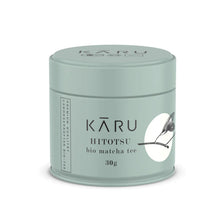
Organic Matcha Hitotsu
Sortenreiner Bio-Matcha aus Uji – ideal, um das typische Herkunftsprofil kennenzulernen.
from 35,00 € , 1.166,67 €/kg
Conclusion: Japan, the land of the finest teas
Each of Japan's tea regions has its own character: Shizuoka stands for fine senchas, Uji for top ceremonial matchas, Nishio for concentrated matcha expertise and Kagoshima for full-bodied organic matcha from volcanic soil. If you understand origin, you make the better choice for your cup – and discover a whole world of the finest teas.


