
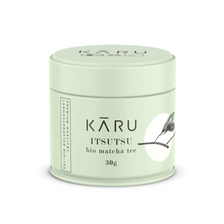
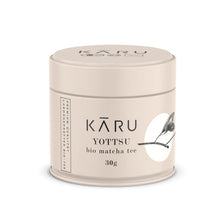



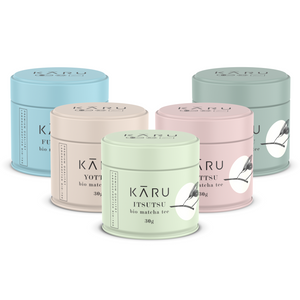


Premium organic matcha from Japan is in short supply – and the matcha boom has made things tighter. If you want to buy truly high-quality organic matcha, you need to look beyond the organic seal: at origin, shading and processing. This buying guide shows you how to recognize genuine premium quality.
Key points at a glance
- In 2024, Japan exported around 5,092 tons of matcha – a good 18–19% more than the year before. Matcha now accounts for more than half of Japan's green tea exports.
- The organic share remains small: only a small part of Japan's tea acreage is certified organic, because many farms shy away from converting due to high certification costs.
- An organic seal guarantees the tea is free of pesticides – but not the quality of its flavor or harvest. It is not a seal of quality.
- Quality comes from shading, harvest timing and stone-mill grinding: a granite stone mill produces only about 30–40 g of matcha per hour.
- After the heat of 2024, the 2025 tencha harvest fell by around 25% in some regions – making premium organic matcha even scarcer.
Today there are countless organic matcha teas on the market, and their quality varies enormously. Truly high-quality premium organic matcha is rare even in Japan. Step by step, we explain why that is – and why an organic seal should not be confused with a seal of quality.

How much Japanese matcha is actually exported?
For a long time, only a fraction of Japanese matcha left the country. The global matcha boom has changed that picture. In 2024, Japan exported around 5,092 tons of matcha – an increase of about 18.7% over the previous year. Matcha now makes up more than half of the roughly 9,000 tons of green tea Japan exports – twice as much as ten years ago.
Even so, high-quality matcha remains scarce. The reason lies in production: tencha, the leaf matcha is made from, is carefully shaded, destemmed by hand and slowly ground in stone mills. A single granite stone mill produces only about 30–40 grams per hour. This bottleneck can't simply be scaled up – especially for the finest grades.
On top of that comes price pressure: large importers often deliberately ask Japanese producers for cheap, basic tea in large quantities. Retailers who don't buy directly in Japan themselves depend on this wholesale supply – and end up selling interchangeable mass-market matcha.
Why is organic matcha from Japan so rare?
Certified organic tea makes up only a small share of Japan's total matcha production. The share of organically farmed land is low, because many farms have so far shied away from converting due to a lack of subsidies and high certification costs.
Matcha has been grown in Japan for centuries, and conventional cultivation methods have been refined over generations. Switching to organic cultivation takes time and money: it requires new, certified organic fertilizers and meeting strict requirements. Conventional fertilizers can be enriched with highly concentrated nutrients that nourish the plant even during the long shading phase. Purely organic blends may contain only natural, mostly plant-based ingredients – and often have only a limited effect.

Is an organic seal a seal of quality?
No. An organic seal confirms that the tea is free of harmful pesticides and additives and was grown organically. It says nothing, however, about origin, length of shading, harvest timing, processing or flavor. Yet these are exactly the factors that determine the quality in your bowl.
Because Western demand is strongly focused on "organic", some farms are changing how they grow their tea – from careful conventional cultivation of selected teas to organic cultivation of mass-market tea. This explains the sometimes disappointing quality of certain organic matchas from drugstores and supermarkets. That doesn't mean every certified organic matcha is inferior – only that the seal alone does not guarantee quality.
How do I recognize genuine premium organic matcha?
What matters is the dedication and experience that go into cultivation, harvesting and processing. Only once a tea has been shaded long enough, harvested correctly and ground gently is it worth asking about the organic seal. The overview below shows what to look for when buying.
|
Feature |
Premium organic matcha |
Mass-market matcha |
|
Origin |
Named region, e.g. Uji or Nishio |
Unclear, often just "from Japan" or China |
|
Shading |
Several weeks before harvest |
Short or unclear |
|
Harvest |
First flush, young leaves |
Later flushes, coarser leaves |
|
Grinding |
Granite stone mill, approx. 30–40 g/hour |
Industrial mill, high throughput |
|
Color & flavor |
Vibrant green, umami, little bitterness |
Yellowish, flat, often bitter |
A word on origin: thanks to Japan's strict government regulations, even conventional Japanese matchas are usually safe to enjoy. That's not always the case with teas from China – some are treated with pesticides that are banned in other countries. With Chinese matcha, you should therefore pay particular attention to an organic seal. You can read more about the differences in our article on price differences in matcha tea.
Is premium organic matcha worth it for everyday use?
For the first sip in the morning or the classic preparation as usucha, high-quality matcha is clearly worth it – here you taste every difference. For matcha lattes, baking or smoothies, on the other hand, a stronger, simpler grade is perfectly fine, because milk and other ingredients cover up subtle nuances anyway. Premium organic matcha shows its strengths where the matcha is enjoyed pure and takes center stage.

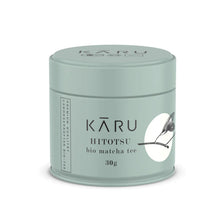
Organic Matcha Hitotsu
Unsere High-End-Sonderedition aus Uji – JAS-zertifiziert, cremiges Umami.
from 35,00 € , 1.166,67 €/kg
Conclusion: premium organic matcha remains a rare commodity
The matcha boom has driven export volumes to record highs – yet truly high-quality organic matcha remains scarce. Limited organic acreage, labor-intensive stone-mill grinding and heat-related weaker harvests meet a growing worldwide demand. If you're looking for genuine premium organic matcha, don't rely on the seal alone – look at origin, shading and processing. That's how a rare commodity becomes a pleasure that's worth its price.


