





Matcha – the vibrant green tea powder – has long been more than a trend. Whether in the traditional Japanese tea ceremony, as a creamy matcha latte or in modern recipe ideas: this fine green tea fascinates tea lovers all over the world. But many people wonder: Where does matcha actually come from, and how is this special powder made?
So you can enjoy your next bowl of matcha even more mindfully, in this article we take a closer look at the origin and production of matcha.
Key points at a glance
- Matcha originally comes from China, but only became known in Japan in 1191 through the Zen monk Eisai, where it developed into a tradition of its own.
- In Japanese, “matcha” literally means “ground tea” – unlike with steeped tea, you drink the whole leaf as a fine powder.
- Before the harvest, the tea plants are shaded for 2–4 weeks; this reduces sunlight by up to 90% and lets more chlorophyll and L-theanine form.
- Traditional granite stone mills turn at only around 30 revolutions per minute and grind just 30 grams of matcha per hour.
- The best-known Japanese growing regions are Uji near Kyōto, Nishio in Aichi and Kirishima in Kagoshima.
What exactly is matcha?
Matcha is a very fine green tea that is not steeped but drunk directly as a powder. The name comes from Japanese and literally means “ground tea”. What makes it special: with matcha, you consume the whole tea leaf – in the form of an ultra-fine powder that is whisked with water. This makes it fundamentally different from almost all other kinds of tea.
The powder has an intense, almost glowing green color. This comes from its high chlorophyll content, which results from the special way it is grown and produced. In terms of flavor, matcha is incomparable: slightly sweet, creamy, full-bodied and with a pleasant umami note.

Where does matcha come from? The story from China to Japan
If we trace the history of matcha back, it doesn’t begin in Japan, but in China. Many centuries ago, tea leaves were already being dried, ground and prepared as a powder there. This tea was used especially in Buddhist monasteries, because it kept the monks awake and focused during long meditations.
This “powdered tea” became truly popular during the Song dynasty (960–1279). Back then, the green powder was whisked with hot water – a preparation that was already very similar to the matcha we know today.
In 1191, the Japanese Zen monk Eisai brought not only tea seeds but also the knowledge of this preparation to Japan. There, matcha continued to evolve. At first it was mainly found in monasteries; later, samurai and nobles also took a liking to it.
While China eventually came to prefer other teas and powdered tea fell into oblivion, it became more and more important in Japan. Today, the word matcha almost automatically makes people think of Japan. No wonder: the best matcha teas come from well-known growing regions such as Uji near Kyoto, Nishio in Aichi, Shizuoka or Kagoshima. Matcha is now produced again in China and other countries too, but the Japanese way of making it is considered the model and benchmark for quality worldwide.
How is matcha made? From the field to the bowl
Turning a simple tea leaf into high-quality matcha powder takes many steps – and a great deal of experience.
Shading the tea plants
Two to four weeks before the harvest, the tea farmers cover the plants with nets. This shading reduces sunlight by up to 90% and changes how the leaves grow. They form more chlorophyll and amino acids such as L-theanine, which gives the leaves their rich green color and characteristic flavor. At the same time, bitter compounds are reduced.

Harvest and processing
Only the most tender, topmost leaves of the first picking are harvested. This is usually done by hand, so that only the best quality goes into production. Right after the harvest, the leaves are steamed so they don’t oxidize, and then dried. This intermediate product is called tencha.

Removing the leaf veins
To get an even powder later on, all coarse parts such as leaf veins and stems are sorted out. Only the pure leaf tissue remains. This step is crucial, because it ensures that matcha gets a fine texture and doesn’t taste unpleasantly harsh.
Grinding in stone mills
The leaf material is then ground in traditional granite stone mills that turn at only around 30 revolutions per minute – deliberately slowly, so that no frictional heat destroys color, aroma and nutrients. This produces only about 30 grams of matcha powder per hour, with a particle size of less than 10 micrometers – finer than most powders. It is exactly this care that makes real matcha so special.

Which regions of origin shape matcha?
Japan is the home of matcha, and various regions have been famous for their tea culture for centuries. Through climate, soil and growing tradition, each area brings out its own character.
|
Region |
Prefecture |
Character |
|
Uji |
Kyōto |
Most traditional growing region, elegant & umami-rich |
|
Nishio |
Aichi |
Leading region for tencha, mild and harmonious |
|
Kirishima |
Kagoshima |
Volcanic soils, full-bodied & elegant |
|
Yame |
Fukuoka |
Known for high tea quality for centuries |
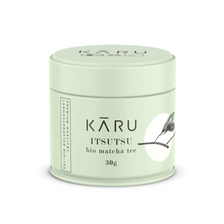
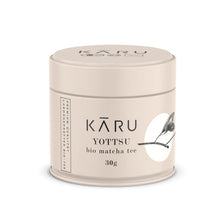
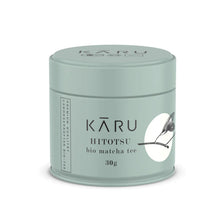
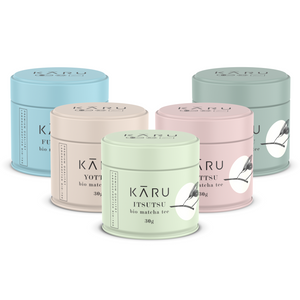
Matcha Kāru deliberately focuses on two regions that stand for exceptional quality: Nishio (Aichi) – one of the leading growing areas for tencha, known for mild, harmonious matcha grades – and Kirishima (Kagoshima), where volcanic soils and a mild climate produce particularly elegant, full-bodied teas. This is how we combine tradition, quality and transparency – and offer you matcha whose origin we stand behind with full conviction.

Organic Matcha Hitotsu
Aus Uji – der Anbauregion, die im Artikel im Mittelpunkt steht
from 35,00 € , 1.166,67 €/kg
What nutrients and effects does matcha have?
A special difference from conventionally steeped tea is that with matcha you consume the whole leaf in powder form. As a result, the drink also contains components that would otherwise mostly stay in the tea bag. Among other things, matcha provides vitamins (e.g. A, B, C, E), minerals such as potassium and iron, and various secondary plant compounds. These include the catechin EGCG, which is especially typical of matcha.

The effect of matcha is unique too: it contains about as much caffeine as an espresso, but its effect is much gentler. The reason is L-theanine, which has a relaxing effect and can release the caffeine more slowly. Many people describe the feeling after a bowl of matcha as “awake, but calm”.
Another plus of matcha is how versatile it is to prepare: whether traditionally as pure matcha tea, as a creamy matcha latte or in creative recipe ideas – the green powder can be enjoyed in many ways.
How can you recognize good matcha quality?
With matcha, quality is decisive. You can recognize high-quality powder by an intense, bright green color and a fresh, slightly sweet aroma. Good matcha tastes creamy and mild and has a pleasant umami note. A yellowish tone, a musty smell or a bitter taste, on the other hand, point to inferior quality.

Terms like ceremonial grade or culinary grade offer guidance, but are not legally protected. It’s best to pay attention to the origin.
How do you get started with matcha?
If you’re just discovering matcha, a few simple tips will help:
-
When buying, look for a fresh color, fine powder and an origin in Japan – these are good indicators of quality.
-
Store the powder cool, dry and protected from light – ideally in a tightly sealed tin.
-
Try out different ways of preparing it: pure, as a latte, in smoothies or even in baking.
-
Take your time when whisking. It takes a little practice until the foam is perfect – but that’s exactly where the joy lies.

Conclusion
The question “Where does matcha come from?” takes us on a fascinating journey: from the monasteries of ancient China through Japanese tea culture to the tea bowls of today. Matcha is more than a drink – it is a piece of tradition, a form of art and, for many, a small everyday ritual.
Every bowl tells of craftsmanship, patience and mindfulness: from shading the tea plants and the careful harvest to whisking with the bamboo whisk. No other tea combines history, flavor and effect quite like this.
So the next time you drink matcha, you’ll know: your bowl holds not just powder, but centuries of knowledge and culture – and a green treasure that is worth enjoying mindfully.


