





The ingredients in matcha make the green powder more than just a tea: because you drink the whole shade-grown leaf instead of throwing it away as with steeped tea, you take in catechins, the amino acid L-theanine, caffeine, chlorophyll as well as vitamins and minerals in concentrated form.
The essentials at a glance
- Matcha is ground from the whole leaf into powder and whisked – so you take in far more of the leaf's compounds than with steeped tea, where the leaf is thrown away.
- The most important catechin is EGCG (epigallocatechin gallate), the most widely studied antioxidant in green tea.
- The amino acid L-theanine forms when the plant is shaded before harvest; one serving of matcha provides roughly 20–45 mg.
- A bowl made with 1–2 g of powder contains roughly 38–88 mg of caffeine – usually less than a cup of drip coffee, but bound to the leaf.
- The often-quoted figure "137 times more antioxidants" comes from a single study with a single comparison tea and can't be generalized.
Matcha comes from the same plant as every other green tea – Camellia sinensis. The difference lies in cultivation and preparation: the bushes are shaded for around 20–30 days before harvest, the leaves are ground into a fine powder and taken in completely when you drink it. That is exactly why the concentration of some compounds per serving is higher than in steeped tea.

Which antioxidants are in matcha?
The most important group are the catechins, a subgroup of polyphenols. The best known is EGCG (epigallocatechin gallate) – the most intensively researched catechin in green tea. Others include EGC, ECG and EC. Because you take in the whole leaf with matcha, one serving can provide more catechins than a steeped cup of green tea.
The famous figure needs some context: the claim that matcha contains "137 times more" EGCG goes back to a study at the University of Colorado (Weiss & Anderton, 2003). It compared matcha with one specific tea called "China Green Tips" – not with green tea in general. More realistic are review articles that, depending on the compound measured, cite roughly 3 to 10 times as much per serving.
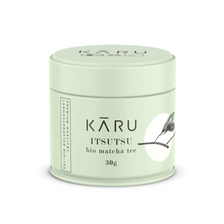
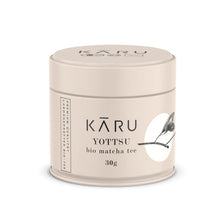
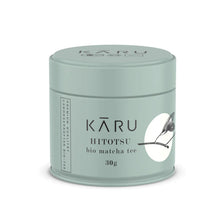
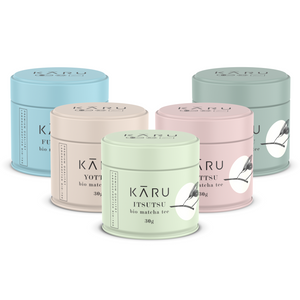
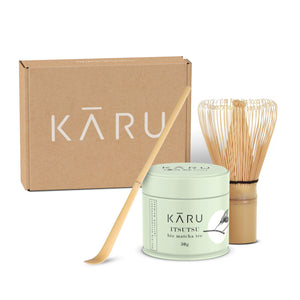
If you want to take in these leaf compounds as fully as possible, you need a high-quality, shade-grown matcha as your base – here is an example from our range:

Organic Matcha Hitotsu
Schattengereifter Premium-Matcha aus Uji mit vollem Umami – hoher L-Theanin-Charakter.
from 35,00 € , 1.166,67 €/kg
What does L-theanine in matcha do?
L-theanine is the amino acid typical of matcha. It forms in greater amounts when the tea plant is shaded before harvest – the same process that gives high-quality matcha its mild umami. One serving provides roughly 20–45 mg, depending on quality, harvest time and amount of powder.
What makes it special is the combination with caffeine: the review by Dietz and Dekker (2017, Current Pharmaceutical Design) evaluated 49 human studies and summarizes the evidence this way: caffeine mainly promotes attention and alertness, while L-theanine can dampen caffeine-related jitters and contribute to relaxation. In EEG studies, as little as around 50 mg of L-theanine increased alpha activity in the brain, which is associated with calm, alert attention.
How much caffeine does matcha have compared to coffee?
A bowl made with 1–2 g of powder contains about 38–88 mg of caffeine. For comparison: a cup of drip coffee (240 ml) comes in at around 95 mg. So matcha usually provides a little less – and the caffeine is bound to the leaf matrix and to tannins, so it is absorbed more slowly and often works more evenly than the quick spike from coffee.
Drink |
Amount |
Caffeine (approx.) |
Matcha |
1–2 g powder / bowl |
38–88 mg |
Drip coffee |
240 ml cup |
approx. 95 mg |
Steeped green tea |
240 ml cup |
30–50 mg |
You'll find a detailed comparison of the two pick-me-ups in our article on matcha as an alternative to coffee.
Which vitamins and minerals does matcha contain?
Because the whole leaf is consumed, fat-soluble and water-soluble leaf components also end up in your drink, some of which stay behind in the leaf when tea is steeped. These include chlorophyll – the pigment that gives matcha its bright green color and that forms in greater amounts through shading – as well as beta-carotene and various minerals such as potassium, calcium and iron.
Which way of preparing it gives you the most?
You benefit in any form, because you always drink the whole powder. You get the highest concentration of dissolved leaf compounds, however, when you prepare thick koicha – it uses much more powder with little water than thin usucha. And quality matters too: a high-quality, shade-grown matcha brings more aroma and more leaf compounds than basic culinary grade. What to look for is explained in our article on quality differences in matcha.
Conclusion: what makes the ingredients in matcha special
Matcha is special because you take in the entire shaded tea leaf – with catechins such as EGCG, the amino acid L-theanine, bound caffeine, chlorophyll as well as vitamins and minerals. Rather than with exaggerated superlatives, the powder is most honestly described like this: a concentrated, whole-leaf green tea drink whose combination of caffeine and L-theanine is particularly well researched.


