





Vegan matcha panna cotta is proof that a dessert without cream and gelatin can turn out creamy, elegant and deep green – based on coconut milk, set with agar agar and flavored with high-quality matcha.
Key points at a glance
- Vegan matcha panna cotta sets with agar agar instead of gelatin – a gelling agent made from red algae that contains no animal ingredients.
- Coconut milk replaces the classic cream; its fat content gives the dessert its creamy body and rounds off the tartness of the matcha.
- Agar agar has to come to a boil (dissolving temperature around 90 °C) and then sets as soon as it cools below about 40 °C – much firmer and faster than gelatin.
- For desserts, culinary matcha is a good fit: bolder and more tart, its bitter note holds its own against sugar and coconut.
- The recipe makes 4 servings, takes under 15 minutes of active time and can easily be prepared overnight.
Panna cotta translates as “cooked cream” and comes from Piedmont in northern Italy. In the vegan version, you swap cream for coconut milk and gelatin for agar agar – the flavor and the typical silky, wobbly texture remain. The matcha gives the dessert not only its striking color, but also a slightly tart depth that pleasantly balances the sweetness.
Why agar agar instead of gelatin?
Agar agar is obtained from red seaweed (mainly of the genera Gelidium and Gracilaria) and is therefore purely plant-based. It has a very high gelling power: even small amounts set reliably, which is why half a teaspoon is enough for 610 g of coconut milk in this recipe.
Temperature is what matters. Agar agar only dissolves completely when brought to a boil (around 85–90 °C) and then sets as soon as the mixture cools below about 32–43 °C. This wide gap between melting and setting point is called hysteresis – it is especially large with agar agar and makes the gel heat-stable up to around 80 °C. Unlike gelatin, which melts at body temperature, an agar panna cotta holds its shape even at room temperature.
Feature |
Agar agar |
Gelatin |
Origin |
Red algae (plant-based) |
Animal collagen |
Sets at |
approx. 32–43 °C |
approx. 15 °C / fridge |
Only melts at |
approx. 85–90 °C |
approx. 35 °C |
Texture |
firmer, sliceable |
softer, wobbly |
Vegan |
yes |
no |
For the panna cotta, this means: the mixture sets quickly and turns out of the mold cleanly. If you like it softer, reduce the amount of agar slightly – if you want an especially firm version, increase it a little.
Which matcha do you use for baking and cooking?
Broadly speaking, matcha is divided into two qualities: ceremonial grade for drinking straight and culinary grade for cooking and baking. For desserts, culinary matcha is the more practical choice. It usually comes from later harvests, tastes bolder and slightly more tart – and it's exactly this bitter note that holds its own against sugar, coconut fat and other flavors without getting lost.
Ceremonial matcha, on the other hand, would lose much of its delicate sweetness and umami nuance in a sweetened dessert; its subtle aromas are masked by the heat and the other ingredients. Important in any case: sift the matcha before stirring it in, so no lumps remain and the color turns out even.
How do I make vegan matcha panna cotta?
The recipe makes four servings. You'll need four small molds or glasses (each holding about 115 g). If you want to turn the panna cotta out later, grease the molds lightly with coconut oil; if you serve it straight in the glass, you can skip the greasing.
Heat
Stir 610 g coconut milk, 50 g cane sugar and 1 tbsp sifted matcha in a pot over medium heat until the sugar has dissolved and the mixture is gently simmering.
Dissolve the agar
Stir ½ tsp agar agar into 60 ml hot water until free of lumps, add it to the hot coconut milk and whisk it in.
Bring to a boil
Bring briefly to a boil, stirring continuously for about 3 minutes until the mixture thickens slightly – this step activates the agar agar.
Chill
Pour into the molds right away and chill for at least 30 minutes. Before serving, loosen the edges with a knife, turn out and garnish with shredded coconut and a little matcha.
One advantage of agar agar: the mixture starts to set at room temperature, chilling only speeds up the process. So pour it into the molds quickly, before it sets in the pot.
Preparing ahead, storing and variations
The panna cotta is easy to prepare ahead: covered, it keeps in the fridge for one to two days. Since agar gels release some liquid over time (syneresis), the dessert is juiciest on the first day. If you want to tone down the coconut note, replace part of the coconut milk with a neutral plant-based milk – although the panna cotta will then be less creamy.

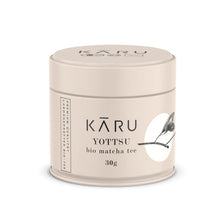
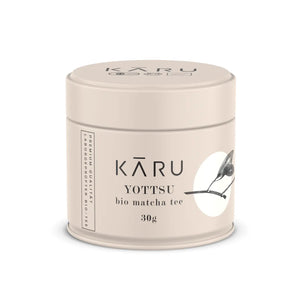
Organic Matcha Yottsu
Kräftig-herber Culinary-tauglicher Bio-Matcha – ideal für Desserts.
from 25,00 € , 833,33 €/kg
Conclusion
Vegan matcha panna cotta comes together with just a few ingredients and no animal products: coconut milk for creaminess, agar agar for a firm set, culinary matcha for color and character. If you follow the temperature rules of agar agar and sift the matcha beforehand, you get an elegant dessert that wins over non-vegans too.


