





Green tea for weight loss is considered an insider tip — the research is more sober: in controlled studies, green tea catechins deliver around 1 kg over 12 weeks on average, and outside Japanese studies often no measurable effect at all. What green tea and matcha can really do, which variety delivers the most EGCG and why it still fits into a change of diet.
Key points at a glance
- Across 11 randomized studies, the meta-analysis by Hursel et al. (2009, International Journal of Obesity) found a mean weight difference of −1.31 kg compared with control groups.
- The Cochrane review CD008650 (Jurgens et al., 2012) paints a split picture: in 6 studies outside Japan, the mean difference was −0.04 kg (95% CI −0.5 to +0.4) — not statistically significant.
- In obesity research, a difference only counts as clinically relevant from about 2.5 kg. Green tea alone does not reach this threshold.
- A meta-analysis of 11 RCTs with 613 overweight participants (2023) found a reduction in waist circumference of −1.37 cm as well as lower triglycerides (−0.18 mmol/l).
- Matcha provides the most EGCG per cup (approx. 60–110 mg), because you drink the whole leaf — ahead of gyokuro (approx. 50–86 mg) and sencha (approx. 25–60 mg).
Does green tea really help you lose weight?
In short: a little, but not the way the advertising promises. The frequently cited 2009 meta-analysis by Hursel and colleagues evaluated eleven randomized controlled trials. The result: green tea catechins — alone or combined with caffeine — reduced body weight by an average of 1.31 kilograms compared with the control group. The authors themselves called this a modest but statistically significant effect.
The 2012 Cochrane review puts this into perspective once more. If you separate the studies by region, the eight Japanese studies show weight losses between 0.2 and 3.5 kilograms — the six studies outside Japan, on the other hand, show practically no effect. Why this is so remains unclear: differences in diet, dosage, study design and starting weight all come into question.
What does EGCG do in the body?
EGCG (epigallocatechin gallate) is the most abundant catechin in green tea and the best-studied substance behind its weight-loss reputation. Two mechanisms are discussed: a slight increase in energy expenditure and a shift in metabolism toward fat burning.
A systematic review of resting energy expenditure and respiratory quotient summarized 15 studies with 499 participants, at EGCG doses between 100 and 800 mg. Clear effects showed up mainly in the respiratory quotient — that is, in the ratio of fat to carbohydrate burning. The effect on resting metabolic rate itself, by contrast, was inconsistent.
For everyday life, this means: EGCG shifts where the body draws its energy from rather than noticeably driving up consumption. Without a calorie deficit, correspondingly little happens on the scale.
Which green tea contains the most EGCG?
The EGCG content per cup depends less on the plant than on how much leaf material actually ends up in the drink. With an infusion, part of it stays behind in the leaf — with matcha, you drink the ground leaf along with it.
|
Variety |
EGCG per cup (approx.) |
Why |
|
Matcha |
60–110 mg |
The whole leaf is consumed, not just infused |
|
Gyokuro |
50–86 mg |
Shaded, high content of soluble compounds |
|
Sencha |
25–60 mg |
Classic infusion, grown in the sun |
|
Chinese pan-fired green tea |
20–40 mg |
Different processing, lower catechin extraction |
In practice, what matters more than the peak value is the amount you drink over the long term. Two to three cups of a medium-strength green tea provide more EGCG over the day than a single cup at maximum dose that you no longer enjoy after a week.
How much green tea makes sense — and where is the limit?
In the studies evaluated, EGCG doses were mostly between 100 and 460 mg daily over at least 12 weeks. That roughly corresponds to two to four cups of matcha or three to five cups of sencha — an amount that is easy to reach as a drink.
The distinction between tea and extract is important. High-dose green tea extracts in capsule form have been linked to liver damage; in 2018, the European Food Safety Authority (EFSA) assessed daily doses of 800 mg EGCG or more from dietary supplements as a cause for concern. This assessment explicitly does not apply to green tea as an infusion.
Green tea or matcha — which suits which goal?
Matcha provides more catechins per cup, plus L-theanine, which makes the effect of caffeine calmer. If you want to replace coffee, this is the more direct switch. Leaf green tea such as sencha or kabusecha is more practical for larger amounts in everyday life: lighter, quicker to prepare, and can be infused several times.
When it comes to weight, the difference between the two is smaller than the difference between "regularly drinks tea instead of soft drinks" and "drinks no tea". Tea's biggest measurable contribution to weight loss is mundane: it has zero calories and replaces drinks that do have them.
What really counts, according to the research
Calorie deficit
No deficit, no weight loss — tea does not change that.
Exercise
Meta-analyses of green tea plus training have so far shown no clear added benefit compared with training alone.
Swap your drinks
Green tea instead of sweetened drinks often saves several hundred calories a day.
Stick with it
The effects in the studies only appeared after 12 weeks of regular consumption.

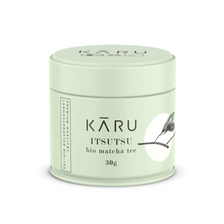
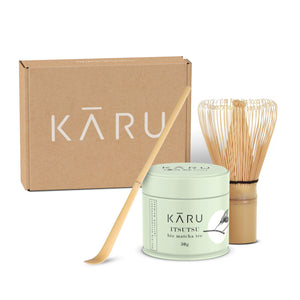
Organic Matcha Itsutsu
Milder Einsteiger-Matcha – ungesüßt getrunken ohne Kalorien
from 19,00 € , 633,33 €/kg
Conclusion: support, not a miracle cure
Green tea for weight loss works — but on the order of about one kilogram over three months, and in studies outside Japan it is often not measurable at all. If you use it as a replacement for sweetened drinks and as a fixed part of a change in diet, you will get the most out of it. If you expect a shortcut, you will be disappointed.
The more honest reason to drink matcha or sencha every day is a different one anyway: it tastes good, it gives structure to your day and it replaces coffee without making you jittery.


