







The sponge roll We always associate the sponge roll with meeting the family on a Sunday afternoon over a delicious cup of coffee.
(Try offering matcha next time. You'll be surprised how quickly the initial skepticism changes when you realize that high-quality matcha can taste really creamy and buttery!)
Here is this classic dessert spiced up with the tangy taste of Matcha tea and visually enhanced by the green color. neat refreshed.
The matcha sponge roll is ideal on the evening before and tastes even better when it is really well done. However, you should sift the matcha for the decoration over the roll just before you want to serve it. Otherwise, the condensation will make the matcha less intense in color.
Ingredients
For the filling:
- 300 ml milk
- 30 g corn starch
- 70g white sugar
- 1 teaspoon honey
- 120 ml whipped cream
- 1 teaspoon vanilla extract
For the biscuit dough:
- 60 g white sugar
- 3 eggs
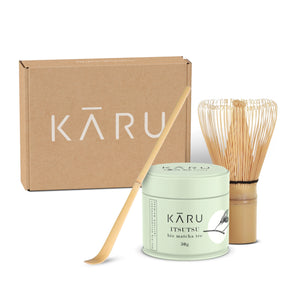
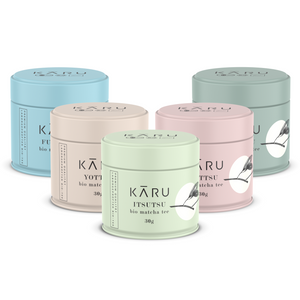
- 1 tablespoon Matcha Basic Line
- 2 teaspoons honey
- 25 g flour
- 1 heaped teaspoon cornstarch (4 grams)
Preparation
The filling
Let's start with the filling. Pour the milk into a small pan, sieve in the cornstarch and stir in with a whisk until there are no lumps.
Then add the honey and sugar, stirring constantly over a low heat. When the milk mixture almost starts to boil, just keep stirring until it becomes smooth. Continue stirring the now thick milk mixture for another 1-2 minutes to cook out the cornstarch flavor.
Remove from the heat and pour into a bowl or shallow dish. Cover the mixture with cling film and press it onto the surface of the mixture to prevent a skin from forming. Then chill in the fridge until cold.
The sponge cake
Next, we bake the sponge cake by mixing the sugar, honey, matcha powder and eggs in a large bowl. Stir the mixture until it has almost tripled in size, has a lighter color and becomes thick and fluffy. This will take about 7-10 minutes.
Now mix the flour with the cornstarch. Sieve this mixture over the cake flour and carefully fold it in.
Heat your oven to 175˚C (top/bottom heat) and coat a baking tray with butter.
Place a sheet of baking paper on top (a few centimeters larger than your baking tray). Press out all the bubbles with a rubber scraper (or your hand).
Pour the batter into the prepared baking tray and bake for 8-10 minutes.
Then beat in a clean bowl whip the cream until stiff; small peaks should form when the beaters are lifted.
Take the cooled filling out of the fridge, add a teaspoon of vanilla extract and stir everything well again, then fold the whipped cream into the mixture.
Leave the cake to cool on the baking tray for 2-3 minutes. Place fresh baking paper next to the cake and sprinkle with powdered sugar. Now place the cake on this baking paper so that the top is on the sugared baking paper. Then remove the old baking paper.
Now spread the filling on the cake. Then roll the biscuit, using the baking paper as an aid.
Now wrap the whole thing in cling film and leave it to rest. two hours in the fridge for two hours.
Enjoy the taste!


