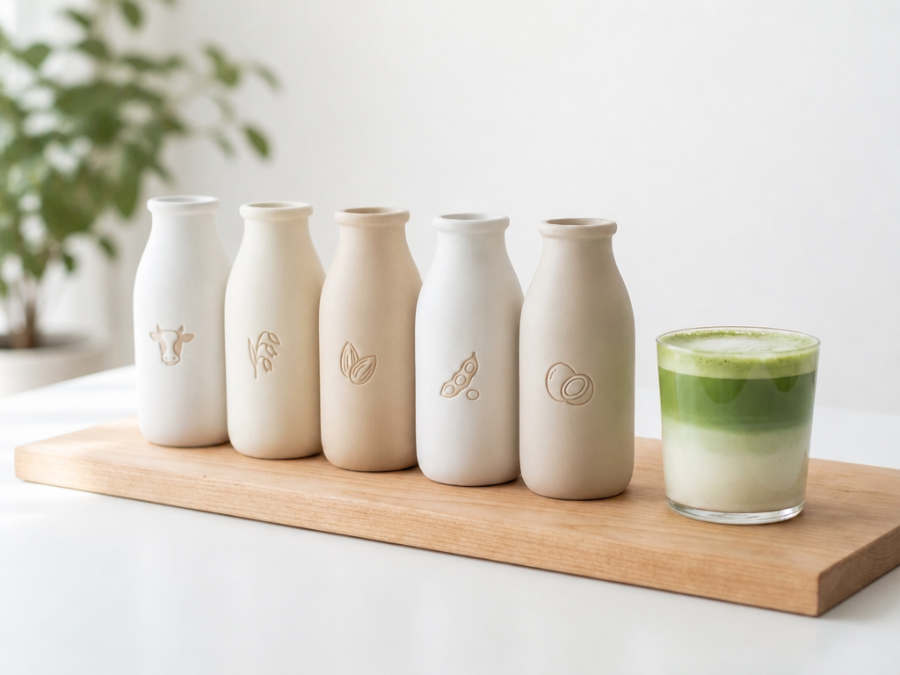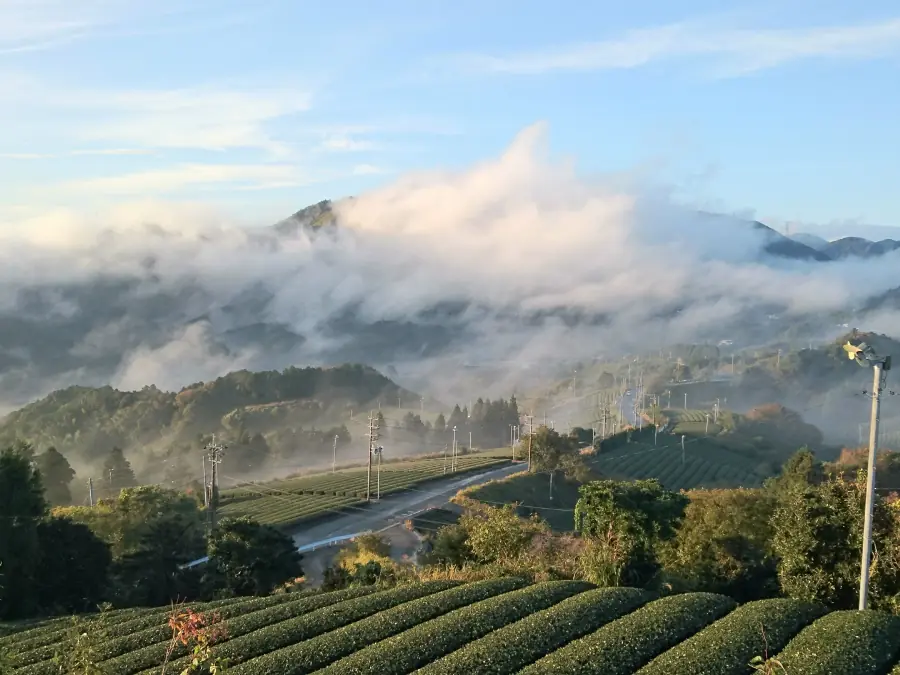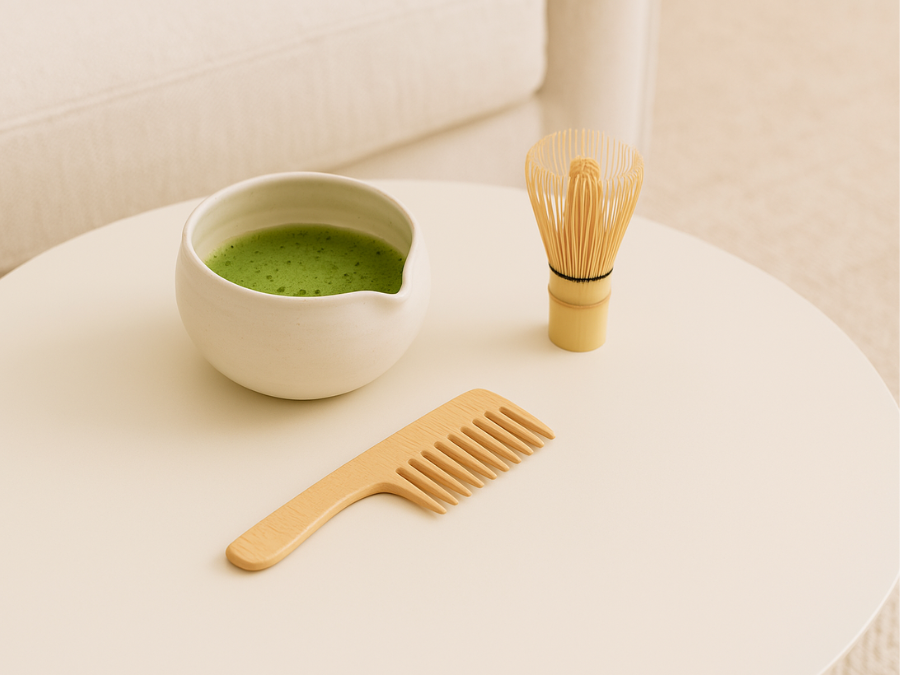



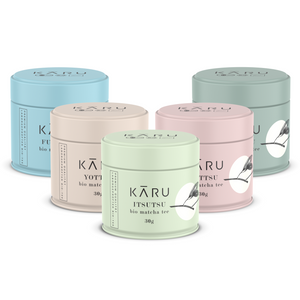


Whether Sencha, Gyokuro, Matcha, black tea, jasmine tea or even barley and buckwheat tea, in Japan there are countless varieties and flavors in which the traditional drink can be found as an everyday companion or in ceremonies. Nevertheless, it is only green tea that is referred to in Japan as tea (ocha お茶) is spoken of in Japan.
But where does this deeply rooted tradition of tea drinking actually come from?
Tea actually came to Japan via China. It is said that the two Buddhist monks studying in China brought tea to Japan.e Saichō and Kūkai during the Heian period (794 - 1185 AD) the first tea seeds of the green tea plant (Camellia sinensis) came to Japan. The drink was regarded as a stimulant for meditation and was initially mainly consumed by nobles and monks. At that time, unlike today, it was mainly prepared with fresh tea leaves or with the so-called tea cake (steamed, then ground and pressed tea leaves).
In the 12th century, the Japanese Zen master named Esai introduced a different type of tea seed and a new method of preparation (as a powder or matcha tea) to Kyōto Prefecture. The first rules for the special preparation of tea were also developed here, which led to the traditional tea ceremony in the Zen temple. The foundation stone for Japan's tea culture was thus laid and the consumption of green tea gradually spread among the aristocracy and later beyond the country's borders.
So what does this tea culture in Japan look like after almost 1000 years?
The drink is still an important part of Japanese culture today. Various variations of tea have been created and there is a suitable variety for every occasion. Whether private or business, guests are offered a cup of tea at every meeting. Nowadays, this can even be accompanied by a matcha powder powder, because not only the different types of tea, but also various product variants (cookies, chocolate, cosmetics, etc.) have become widespread.
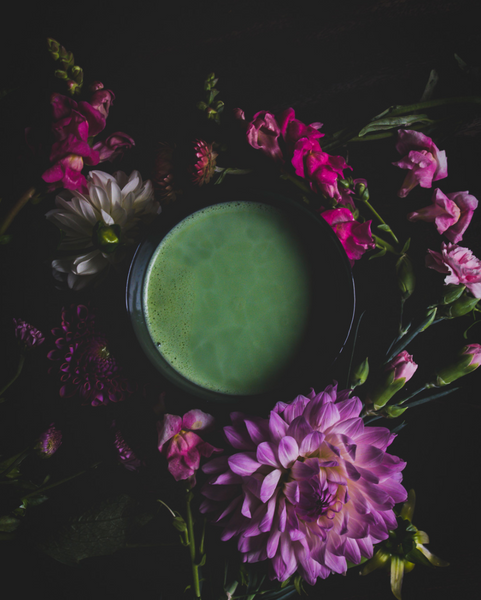
However, it is not only the everyday enjoyment of tea, but also the traditional tea ceremonieswith their centuries-old customs, are still firmly anchored in the lives of the Japanese today. However, compared to the past, tea rituals are only practiced by a small section of society and the enjoyment of tea has become less complex. For example, it is no longer a matter of course for young people in particular to have the appropriate accessories for making tea. Instead, ready-to-drink teas are increasingly being consumed away from home, which is partly due to the emergence of hip tea houses with a great atmosphere, especially in major cities.
The Japanese tea culture has thus partly adapted to the needs of today's society. To what extent it will continue to develop in the future remains to be seen. If we have now aroused your interest in Japanese culture in general, not just in relation to tea, then the blog posts Kinisugi - Repairing with gold and Traditional Colors of Japan - An Overview by Floratcha inspire even more:-)
And if you now want to know how a traditional, Japanese tea ceremony and which rules are of particular importance, you'll have to wait until the next blog post:-)
Until then, we are of course interested to know whether you have already had any experience with Japanese tea culture?