





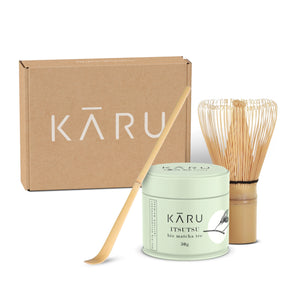


Ceremonial Matcha is considered the pinnacle of the matcha world. Anyone who has tried it knows: This tea is more than just a drink. It’s a piece of Japanese culture, a brief moment of tranquility—and a true taste experience. But what does “Ceremonial Grade” actually mean? And why do we at Matcha Kāru deliberately use this term sparingly?
What does “Ceremonial Grade” mean when it comes to matcha powder?
The term “Ceremonial Grade” originates from the Japanese tea ceremony. There, matcha is traditionally served in its purest form—without milk, without sugar, just as a fine powder whisked with hot water. To be suitable for this purpose, it must possess certain characteristics:
-
A vibrant green color that indicates an abundance of chlorophyll.
-
A mild, sweet aroma without any dominant bitter notes.
-
An intense umami flavor that lingers on the palate.
-
A fine, velvety texture that dissolves smoothly into the water.

Ceremonial matcha is almost always made from the first spring harvest. Only the youngest leaves, which are particularly rich in L-theanine, are picked. This amino acid not only provides the characteristic umami flavor but also delivers a balancing effect: gentle energy from caffeine combined with soothing calm.
Not a protected term—and why that matters
As high-quality as the term sounds—it is not protected. Any supplier can label their powder “Ceremonial Grade” without there being any fixed criteria for doing so. Some manufacturers also assign numerical ratings such as “90/100” or “Supreme Premium Matcha.” These claims sound impressive, but they are neither verifiable nor legally binding or enforceable.

This means there are significant differences in the market. A powder labeled “Ceremonial” may actually be of a completely different quality grade. For you as a customer, it therefore makes much more sense to pay attention to visible characteristics such as color, aroma, and origin—rather than blindly trusting labels and “marketing buzzwords.”
How Is Ceremonial Matcha Made?
The journey from leaf to powder is crucial for the final taste experience. High-quality Ceremonial Matcha is produced with great care:
In the weeks leading up to harvest, the tea plants are shaded. This slows their growth, allowing them to produce more chlorophyll and amino acids. This results in the vibrant green color and the sweet, umami-rich flavor.

Only the most tender leaves from the first picking are harvested. These are steamed immediately after harvest to prevent oxidation, then dried and stripped of stems and veins. What remains is what is known as tencha. It is only through slow grinding in granite stone mills that the ultra-fine matcha powder is produced, which develops its creamy consistency in the bowl.
The cultivar—that is, the tea variety—also plays a role. Okumidori, for example, is particularly popular and known for its rounded, sweet flavor profile. Of course, the region also plays a role: climate, soil, and cultivation traditions significantly influence how the tea will taste later on. Different regions therefore produce their own unique nuances—ranging from mild and sweet to intense and complex.
Ceremonial, Culinary, or Premium Grade—The Difference
You may have already come across different quality grades:
-
Ceremonial Matcha—the highest grade, ideal for enjoying on its own.
-
Premium Matcha—also very high quality, often slightly stronger, and perfect for a creamy matcha latte.
-
Culinary Matcha—for recipes and cooking, with a stronger flavor and a coarser grind.

It sounds clear-cut—but it’s not always that simple. Because, as mentioned, these terms aren’t protected. That’s why at Matcha Kāru, we focus less on labels and more on honest information about origin and processing. With us, you’ll find only matcha that’s suitable for pure enjoyment—that is, grades that meet the criteria for Ceremonial and Premium Grade matcha.
How can you tell if matcha is good?
If you’re unsure, a quick look and a brief smell test can help:
-
Color: High-quality matcha has a vibrant green hue. Yellowish or dull tones indicate lower quality.
-
Aroma: It should be fresh and slightly sweet, not musty or hay-like.
-
Taste: Mild, creamy, with a pleasant umami flavor. Bitterness or a fishy aftertaste are red flags.
The packaging also plays a role. Matcha is best stored in light-proof aluminum tins.

What Matters at Matcha Kāru
Now that you know what makes for good matcha, we’d like to show you how we at Matcha Kāru meet these standards. Here at Matcha Kāru, we could easily label our varieties as “Ceremonial Matcha”—because they meet exactly the criteria associated with that term. But we don’t want to play with vague terms; instead, we’d rather offer you true transparency.
That’s why you’ll find the following with us:
-
Focus on flavor: We carefully select every matcha, and each one impresses with a harmonious balance of sweetness, umami, and subtle notes.
-
Organic quality: Our matcha comes from certified organic cultivation in Japan—completely free of pesticides or artificial additives.
-
Transparency Instead of Labels: We tell you the origin, region, variety, and processing method. That way, you can judge for yourself what’s inside your can.
So for us, it’s not the label that counts, but what actually ends up in your cup.
Our Varieties at Matcha Kāru
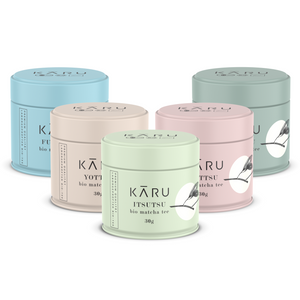
All of our teas meet the criteria associated with ceremonial-grade quality—but differ in cultivar, harvest, and shading. This gives each variety its own flavor profile and ideal use:
-
Itsutsu: Fresh and intense, partially shaded from the Yabukita cultivar. Ideal for a bold matcha latte or smoothies.
-
Yottsu: Complex and full-bodied, from the first harvest and shaded for a longer period. Perfect for traditional preparation or a particularly elegant “Deluxe” latte.
-
Mittsu: Lively, intense, and fresh. Hand-picked from the first harvest in Nishio (Aichi), fully shaded for at least 21 days. An all-rounder for anyone who prefers a slightly more intense flavor.
-
Futatsu: Gentle, rounded, and subtle. Also from Nishio, but shaded for 30 days and hand-picked. A harmonious tea that delights even matcha beginners.
-
Hitotsu: Round, complex, and elegant. Okumidori cultivar, first harvest from Kirishima (Kagoshima). Shaded for more than 30 days, making it particularly rich in umami—perfect for pure enjoyment.

No matter which variety you choose, with Matcha Kāru you’ll always get the highest-quality organic matcha powder, straight from Japan.
Discover our selection of matcha here.
Conclusion: Organic Matcha with Transparency Instead of Empty Labels
“Ceremonial Matcha” sounds like a clear promise of quality—but in reality, it’s not a protected term. That makes it all the more important to focus on what really matters: taste, color, origin, and transparency.
At Matcha Kāru, you’ll find matcha that meets these standards. Whether you choose Itsutsu, Yottsu, Mittsu, Futatsu, or Hitotsu—you can be sure that your can contains only organic matcha, produced in Japan with care and tradition.
This way, every cup becomes not just a drink, but a moment of calm, focus, and true tea enjoyment.


