







Coffee is the most popular drink in Germany and is particularly popular for its stimulating effect due to the high caffeine content appreciated. It is therefore indispensable at breakfast and at work. Possible side effects such as a sour stomach and an unpleasant nervousness and tenseness with excessive consumptionare often accepted. But is matcha tea a real alternative to coffee? Does the green powder make you just as alert as our favorite brown drink? Let's find out.

Matcha tea vs. coffee - enjoy coffee with caution
The majority of us will certainly not drink the black filter brew in the office because it tastes so wonderfully aromatic, but primarily to wake us up. Monday mornings in particular can be frighteningly long without any caffeine doping. And coffee is known for its wake-up effect. The caffeine is quickly absorbed by the body and stimulates the circulation.

However, the caffeine also causes adrenaline to be released. With increased consumption, this leads to a stress reaction of the body, which promotes nervousness and a general feeling of discomfort. The stimulating effect also only lasts for a short time. The rapid depletion of adrenaline can lead to tiredness, headaches and a general malaise. slight irritability irritability. Together with the caffeine, the acid and coffee oil it contains stimulate stomach acid production, which leads to stomach pain and heartburn. So if you have a sensitive stomach, you should be careful with coffee. Ultimately, however, everyone has to make their own Experience with matcha for yourself. However, you can find out about the basic advantages and disadvantages in advance.

Matcha as an alternative pick-me-up
Unlike coffee, the caffeine in matcha powder is in a bound form. It is therefore not released in the stomach as with coffee, but only in the intestines. As a result, the effect unfolds more slowly but longer lasting. There is no strong stimulation, but a gentler effect. As there is no sudden drop in the adrenaline level side effects such as discomfort and tiredness tend to be avoided.
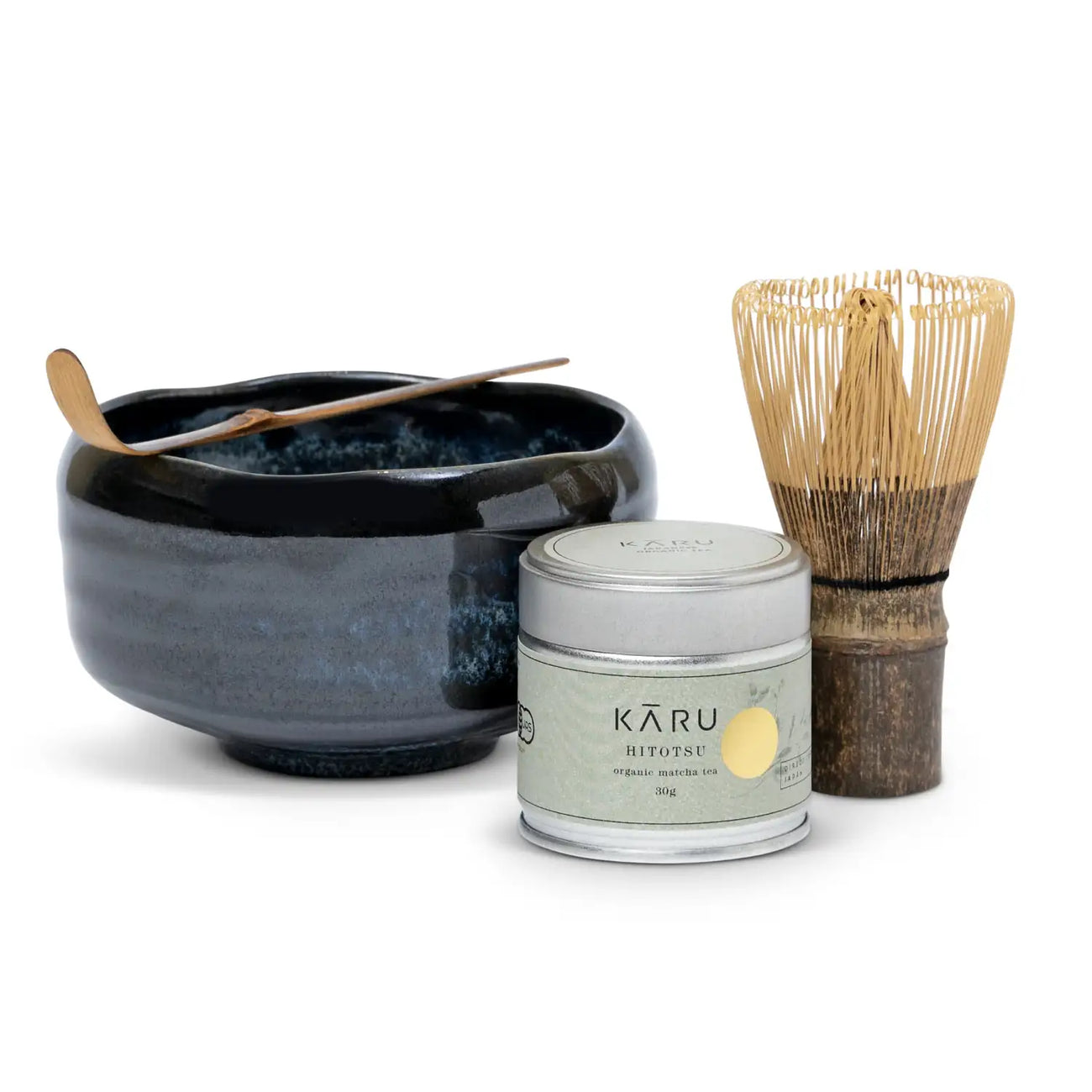 |
Hitotsu set Ideal for the traditional preparation of matcha tea. |
Matcha tea also contains neither strong acids nor oils that additionally stimulate the production of stomach acid. With its abundance of nutrients Matcha has a lot more to offer the body than coffee, even on paper. The forms of preparation are just as varied as with coffee: it can not only be traditionally prepared traditionally, but also as matcha latte or cold lemonade in summer.

Matcha tea vs. coffee - the ingredients
The most interesting aspect of this comparison is probably the caffeine content. Calculated per gram, matcha green tea has almost 6 times more caffeine than coffee. However, since you need average Matcha only requires 2 grams of powder and a cup of coffee approx. 12 grams, this value only has a limited significance. However, a simple rule of three quickly shows that the finished drinks are very close to each other in terms of caffeine content (60-80mg). Of course, this always depends on the particular preparation. With a strong espresso the caffeine content can be twice as high as with conventional filter coffee.

Matcha, on the other hand, prepared as koicha (a little water on a lot of matcha) is much more concentrated than a normal usucha (light tea). In total, no more than 3-5 bowls should be drunk throughout the day. And increased consumption is particularly inadvisable during pregnancy.
In addition to caffeine, matcha powder has a number of other ingredients to offer. In addition to a variety of vitamins and minerals, the tea also has a very high proportion of amino acids and antioxidants.

Matcha vs. coffee - the bottom line
Although both drinks have a high caffeine content and therefore serve as a stimulant, they have different modes of action. If the coffee kicks in quickly, the invigorating effect wears off just as quickly and can be unpleasant side effects can have unpleasant side effects. Due to the stomach acid stimulating substances in coffee, excessive consumption can also lead to heartburn and discomfort. Matcha tea, on the other hand, unfolds its effect gently and long-lasting and probably has less of an impact on the body's normal function than coffee. Through an abundance of healthy ingredients (minerals, antioxidants and amino acids), matcha green tea has a lot to offer our body. Therefore, not only people with a sensitive stomach, but all those who do not want to give up the positive effects of Matcha should see the tea as a real alternative to coffee. You can find out the best way to prepare matcha latte, the alternative to cappuccino, in our blog post: "Matcha latte - the creamy alternative to cappuccino".


