






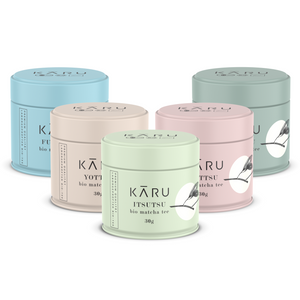


Matcha is a true super-food. The nutrient concentration of the fine powder is many times higher than conventional teas. This is because the whole leaf is consumed and the tea is not just steeped in water for a while. Matcha therefore has a 10 - 15 times higher nutrient content than other types of green tea.
In addition to caffeine, amino acids and antioxidants a variety of vitamins and minerals. In addition to vitamins A, B1, B2, B6, E, C and K, the tea also contains important substances such as calcium, iron, potassium, zinc and copper.
The following ingredients have the most important effect on the body:

Nutrients in matcha - concentrated antioxidants
Matcha tea contains a very high concentration of antioxidants. A large number of studies indicate that antioxidants combat free radicals and thus protect the cell from harmful influences. The catechin EGCG (epigallocatechin gallate) in particular is said to play a decisive role in this. This is present in a concentration up to 140 times higher than in conventional green teas and is a real miracle cure. EGCG is said to have an anti-inflammatory and immune system-supporting effect. Due to its very high chlorophyll content, the tea is also said to have an antibacterial and detoxifying effect. Many studies are currently pointing in this direction; as soon as reliable results are presented, we will add them here immediately!

Effect of matcha tea - active through caffeine
In contrast to coffee, the caffeine in matcha tea is found in bound form form. As a result, it is absorbed more slowly by the body and has a longer-lasting effect. It is also less stimulating. A bowl of matcha with 1.5 - 2 grams of tea powder contains about as much caffeine as a strong espresso. You can find a detailed comparison of matcha with coffee and the different effects in this article >>>
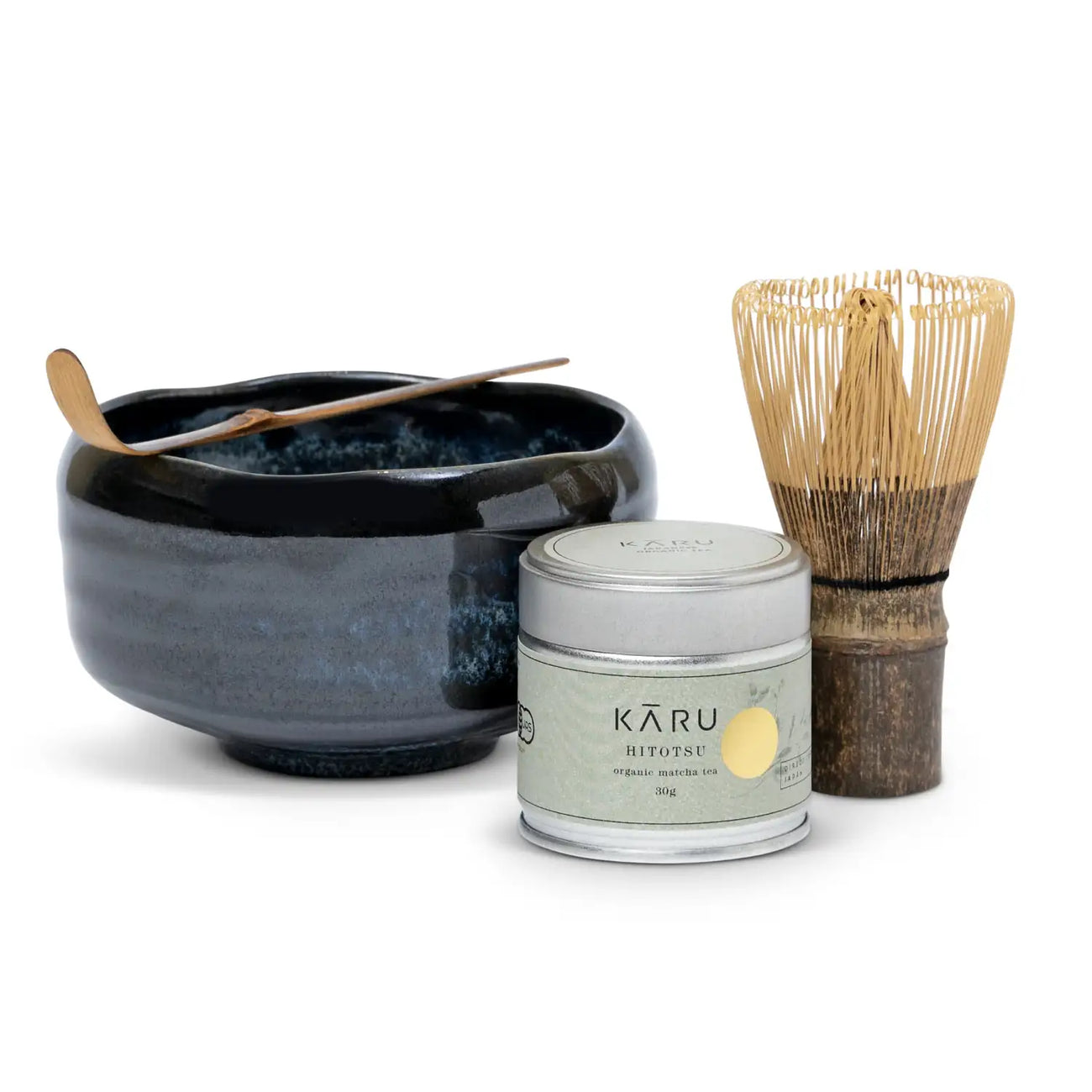 |
Hitotsu Set Ideal for the traditional preparation of matcha tea. |
Matcha tea effect - special effect through amino acids
Due to the long shading of the matcha tea, it develops a special high amino acids-concentration. The most important amino acid is L-theanine. Studies indicate that it increases brain activity support concentration and have a calming effect on the body. [Nieoullon, 2002; Meneses, 1999; Tamano et al., 2014]. Together with caffeine, this is an unbeatable combination for performing demanding tasks in the everyday life to master.

In what form does matcha bring me the most benefit?
First of all: in any form. However, the traditional preparation without milk probably gives you the most positive effects of the green all-rounder. And you can enjoy a matcha latte in a café that hasn't looked closely at which quality your matcha needs to be for it to be good for you, then you will probably get little taste and few positive benefits. You can find out more about this in our blog about differences in quality of matcha.
But once you have found the right matcha for you, you will get the ultimate nutrient bomb if you use Usucha and above all koicha (thick tea).
Conclusion - Ingredients and effects of matcha tea
Matcha tea is literally a green wonder weapon. Due to the very high concentration of nutrients, the powder has a whole range of positive properties that you better through the day bring.


